
If you’re a small reseller looking into Amazon return pallets, you’re probably trying to figure out one thing: Is this actually worth it at my scale?
The short answer is it can be. But the gap between a profitable pallet and an expensive lesson comes down to where you buy, what you’re actually getting, and whether you’ve done the math on shipping before you click “purchase.”
This guide is built for small resellers. Not warehouse operations buying 20 truckloads a month. People running bin stores, selling on eBay or Whatnot, or testing liquidation as a side business.
What You’ll Learn in This Guide
➤ Where Amazon return pallets actually come from and why that affects what you’ll find inside.
➤ The real reason “mystery pallets” are marketed so aggressively, and why they rarely work out.
➤ What to look for in a pallet supplier before you spend a dollar.
➤ Which sourcing path makes sense based on how you sell and how much capital you’re working with.
➤ When pallets make sense and when it’s time to start thinking about truckloads.
Quick Overview
How Amazon Pallet Liquidation Works
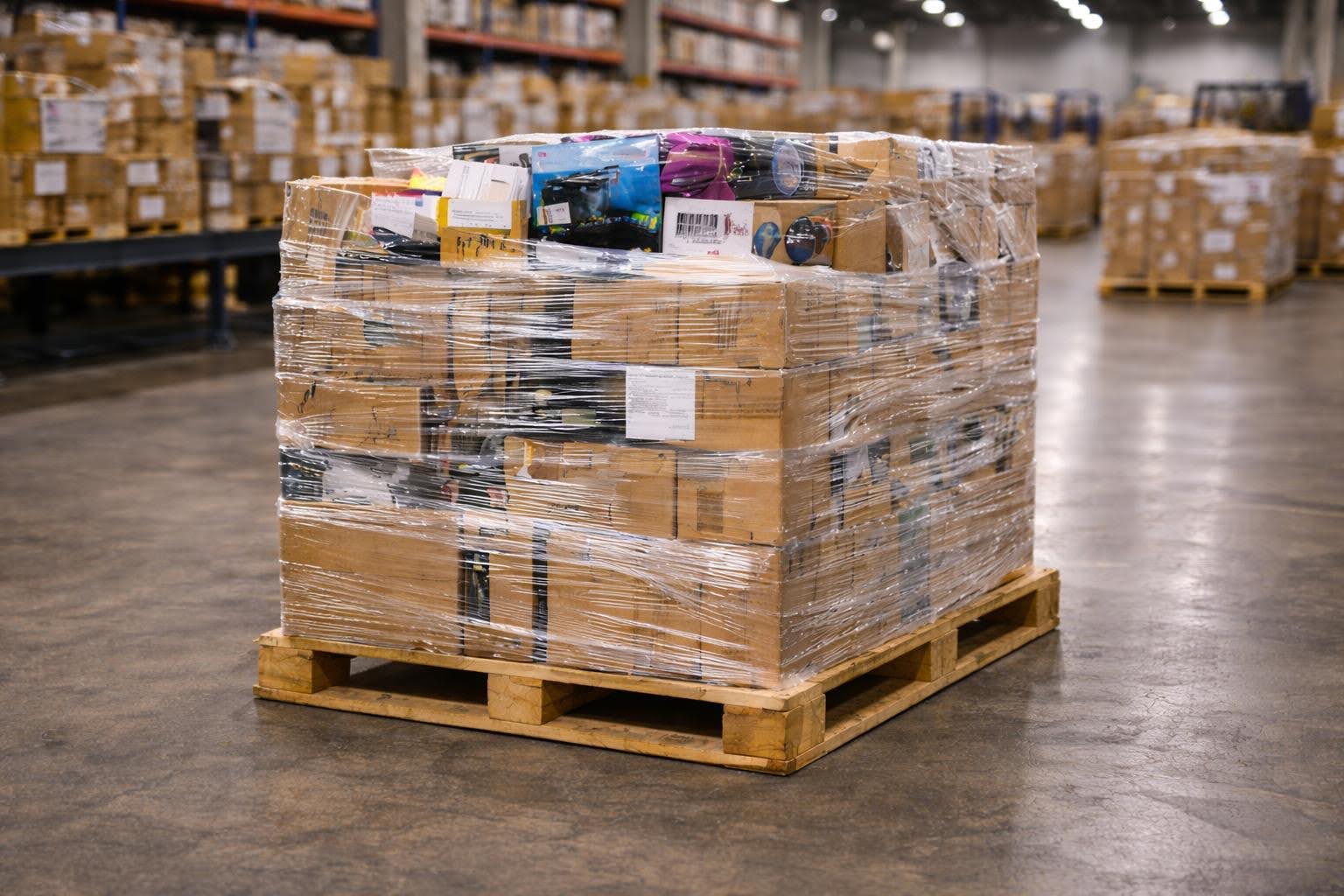
Amazon doesn’t sell pallets directly to individual resellers. When customers return items to Amazon, or when third-party FBA sellers abandon inventory rather than pay to have it shipped back, those goods get categorized by condition and routed to authorized liquidation partners in bulk.
Amazon groups this inventory into specific load types. HPC (high piece count) loads packed with hundreds of smaller items. LPN loads containing individually processed returns. FC (fulfillment center) loads with shelf pulls and overstock that are often newer and cleaner. By the time those loads get broken into individual pallets and sold to small buyers, the inventory has passed through at least one set of hands beyond Amazon.
That’s not automatically a problem. But the quality and value of your pallet depends heavily on who handled it before it reached you.
Where Amazon Return Pallets Actually Come From
Knowing where your Amazon pallet came from tells you a lot about what’s likely inside.
Pallets Broken From Amazon Truckloads
This is the most common source. A supplier purchases a full Amazon return truckload (24+ pallets) from a distribution center, then sells individual pallets to smaller buyers.
The good: You’re getting genuine Amazon return inventory without needing to buy an entire truckload. Because Amazon moves such massive volume across so many product categories, the variety tends to be better than pallets from other retailers.
The risk: Some suppliers cherry-pick the best Amazon items out of a truckload for their own resale channels and sell the remaining pallets to you. That brand-name electronics or high-value kitchen gear you saw advertised? It may already be gone.
This is where your choice of supplier matters most. Some suppliers buy a full Amazon truckload, pull out the high-value items to sell individually on eBay or in their own store, then sell you the remaining pallets as “Amazon returns.” You’re not getting a representative pallet. You’re getting what was left after someone else took the best stuff.
Look for suppliers whose business is selling pallets and truckloads to resellers, not picking through loads for their own individual resale. That’s a very different operation with very different incentives.
Auction Platform Pallets
Platforms like Liquidation.com sell Amazon return pallets through competitive bidding. Some of this inventory ships directly from Amazon fulfillment centers, which means it hasn’t been sorted by intermediaries.
The downside for small resellers: auction prices have climbed as competition has increased, you’re responsible for freight, and the experience is self-service. No one’s helping you figure out which Amazon load type is right for your business or explaining the difference between an LPN pallet and an HPC pallet.
Local Liquidation Warehouses
Some buyers prefer to visit local warehouses where they can see pallets in person before purchasing. This eliminates shipping costs and gives you a chance to inspect merchandise firsthand.
The trade-off is selection. Local warehouses carry whatever they’ve sourced, which may or may not include Amazon returns specifically. And even when they do carry Amazon inventory, you have limited visibility into which Amazon load type it came from or how many hands it’s been through.
What to Look for Before You Buy a Pallet

These are the things that separate a smart pallet purchase from an expensive mistake.
➤ Honest condition expectations. If a supplier claims “90% retail value” or “mostly new items,” be skeptical. Amazon return pallets contain a genuine mix. New, opened, damaged, missing parts. Amazon’s return policy is generous, which means a lot of perfectly good items get sent back, but it also means plenty of items come back used, incomplete, or broken. A good supplier tells you that up front.
➤ Shipping cost relative to pallet price. This is the margin killer for small buyers. A $400 Amazon pallet with $200 in shipping is really a $600 pallet. Always factor the landed cost before you calculate profit. Buying from a supplier with a warehouse close to you, or one that offers competitive freight rates, makes a real difference.
➤ Return or resolution policy. Liquidation is generally final sale. But how a supplier handles problems tells you everything. Do they work with you when a pallet doesn’t meet expectations, or do they disappear? Our approach is to stand behind what we sell and work with buyers on resolution.
➤ Communication. Can you reach a real person before you buy? Can they answer your questions? If you can’t get someone on the phone before sending money, that’s all you need to know.
Best Options by Buyer Type
Bin Store Operators
You need consistent volume and high piece counts. Your entire model depends on keeping bins stocked with enough variety to bring customers back.
Amazon pallets are ideal for bin stores because of the sheer category diversity. That variety keeps your bins interesting without needing to source from multiple suppliers.
We supply AMZ pallets with fresh inventory constantly arriving from distribution centers across the country. That means you can build a regular purchasing schedule instead of hunting for stock week to week.
Online Resellers
If you’re selling on eBay, Whatnot, Facebook Marketplace, or your own store, you need items that photograph well, have clear resale value, and move quickly.
Amazon pallets work well for online resellers because many items still have original packaging, UPC codes, and recognizable branding that buyers trust. Category-specific Amazon pallets (electronics, home goods, tools) tend to perform better for online sellers than mixed general merchandise because you can build listings around a focused inventory.
First-Time Buyers
Your first pallet is a learning experience. Don’t overthink it, but don’t buy blind either.
Go with a supplier who will talk you through what to expect, help you pick a pallet that fits your budget and selling plan, and be available when you have questions after it arrives. We offer same-day communication and a hands-on approach, for a solid starting point for new buyers who want guidance without pressure.
Side Hustle Buyers
Limited space, limited capital, limited time. That’s fine. Start with a single pallet, learn what sells in your market, and reinvest from there.
Keep your first purchase small enough that a bad outcome doesn’t sink you. A pallet in the $300-$800 range from a trusted supplier is a reasonable test. If it works, buy another. If it doesn’t, you’ve learned something valuable without major financial damage.
Where Small Resellers Get Burned on Amazon Pallets
Five mistakes that cost small buyers real money.
- Buying “Amazon mystery pallets” based on hype. Mystery pallet marketing is designed to create excitement, not profit. The surprise factor is fun for content creators but terrible for building a business. You can’t plan inventory, pricing, or sales channels around Amazon merchandise you know nothing about.
- Ignoring shipping costs. On a single Amazon pallet, shipping can eat 30-50% of your purchase price, depending on distance. Always get the freight quote first. Better yet, buy from a supplier close to you or one that offers reasonable shipping rates.
- Trusting inflated retail values. Amazon retail prices fluctuate constantly, and the “estimated retail value” on a pallet listing often reflects the highest price those items ever sold for, not what they’ll actually bring on the secondary market. Calculate your expected profit based on realistic resale prices.
- Choosing the cheapest pallet. The $150 Amazon pallet from an unknown seller on Facebook is cheap for a reason. It’s almost certainly been picked through. Paying a bit more from a reputable supplier typically means better merchandise and fewer total losses.
- Not having a plan to move the merchandise. An Amazon pallet sitting in your garage isn’t making money. Before you buy, know exactly how you’re going to sort, price, and sell. Speed matters in liquidation resale.
Pallets vs. Truckloads for New Amazon Buyers
This is the question most small Amazon resellers eventually face: when does it make sense to scale from pallets to truckloads?
Amazon pallets make sense when:
➤ You’re still learning what Amazon return categories sell in your market
➤ Your capital is limited, and you can’t afford large amounts of cash tied up in a single purchase
➤ You don’t have warehouse space for 24+ pallets at once
➤ You want to test a supplier before committing to larger orders
Amazon truckloads make sense when:
➤ You’ve proven your resale channels and know which Amazon categories move
➤ You have the space and labor to process a full trailer
➤ You want lower per-item costs (Amazon truckloads are much cheaper per unit than individual pallets)
➤ You’re ready for the capital commitment and understand freight logistics
The per-item economics clearly favor truckloads. But the learning curve and capital risk favor starting with pallets. There’s no shame in the pallet game. It’s how most successful truckload buyers got started.
We support buyers at both levels. Start with pallets, build your confidence and your systems, and scale into AMZ truckloads when the numbers make sense. You won’t need to find a new supplier when you’re ready to grow.
Final Guidance on Amazon Pallets
Amazon return pallets can be a real business or an expensive hobby. The difference is whether you treat it like a business from day one.
Buy from someone you can talk to. Know your landed cost. Have a plan to move the merchandise. And don’t chase hype when the math doesn’t work.
FAQs
Are Amazon mystery pallets worth buying?
For content creation and live selling entertainment, maybe. For building a consistent resale business, generally not. You can’t plan your inventory strategy around merchandise you know nothing about. Category-specific pallets from a transparent supplier are a better foundation.
How many items are in a typical Amazon return pallet?
It varies widely by load type. A high piece count (HPC) pallet might contain hundreds of small items. A general merchandise pallet might have 50-100 mixed items. Electronics or large-item pallets may have fewer units but a higher individual value. Ask your supplier about typical counts for the specific pallet type you’re considering.
Can I start with pallets and scale to truckloads later?
You certainly can. Most successful truckload buyers started with pallets. It’s the smartest way to learn what sells, build your systems, and test suppliers before committing larger capital.
Are Amazon return pallets better for resellers than Target or Walmart pallets?
Amazon pallets tend to offer the widest variety of categories, which makes them popular with bin stores and general resellers. Target pallets often lean heavily on apparel and home goods. Walmart pallets can be more mixed-condition with strong volume. We carry Amazon, Target, and Walmart inventory, so you can test different retailers and figure out which works best for your market without switching suppliers.
